Key message
A handheld fan does not increase oxygen levels or treat the underlying lung condition. It works by sending calming signals to the brain, helping breathing feel more comfortable during episodes of breathlessness.
Why can something so simple help?
Many people are surprised when a healthcare professional suggests carrying a small handheld fan. It seems almost too simple. How could a gentle flow of air possibly help someone who feels breathless?
The answer is that the fan is not changing the amount of oxygen in the air. Instead, it changes the way the brain interprets breathing. For many people living with chronic breathlessness, this simple technique provides noticeable relief during episodes of breathlessness.
How does a handheld fan work?
The skin around your nose, mouth and cheeks contains specialised nerve endings that detect cool air moving across the face. These nerves send signals to the brain whenever cool airflow is detected.
Research suggests these signals can reduce the sensation of breathlessness. Although scientists are still learning exactly how this happens, the brain appears to interpret cool airflow as reassuring information about breathing. As a result, breathing often feels more comfortable.
Importantly, the fan is not treating the underlying lung condition. It is helping reduce the unpleasant sensation of breathlessness.
How it changes the sensation of breathlessness
One of the most important messages throughout this website is that breathlessness is created by the brain after interpreting information from the body. The handheld fan provides another source of information.
When cool air reaches the face, the brain receives additional sensory input that appears to reduce the intensity of breathlessness for many people. This does not mean the symptoms are imagined. It means the brain uses many different signals when creating the experience of breathing.
A simple tool you can carry anywhere
One of the greatest advantages of a handheld fan is its simplicity. It is:
- lightweight
- inexpensive
- easy to carry
- available whenever you need it
- free from medication side effects.
Many people choose to keep a fan in a pocket, handbag or coat so it is always available when breathlessness occurs. Some people also find it helpful before activities they know may make them breathless, such as climbing stairs or walking uphill.
How to use a handheld fan
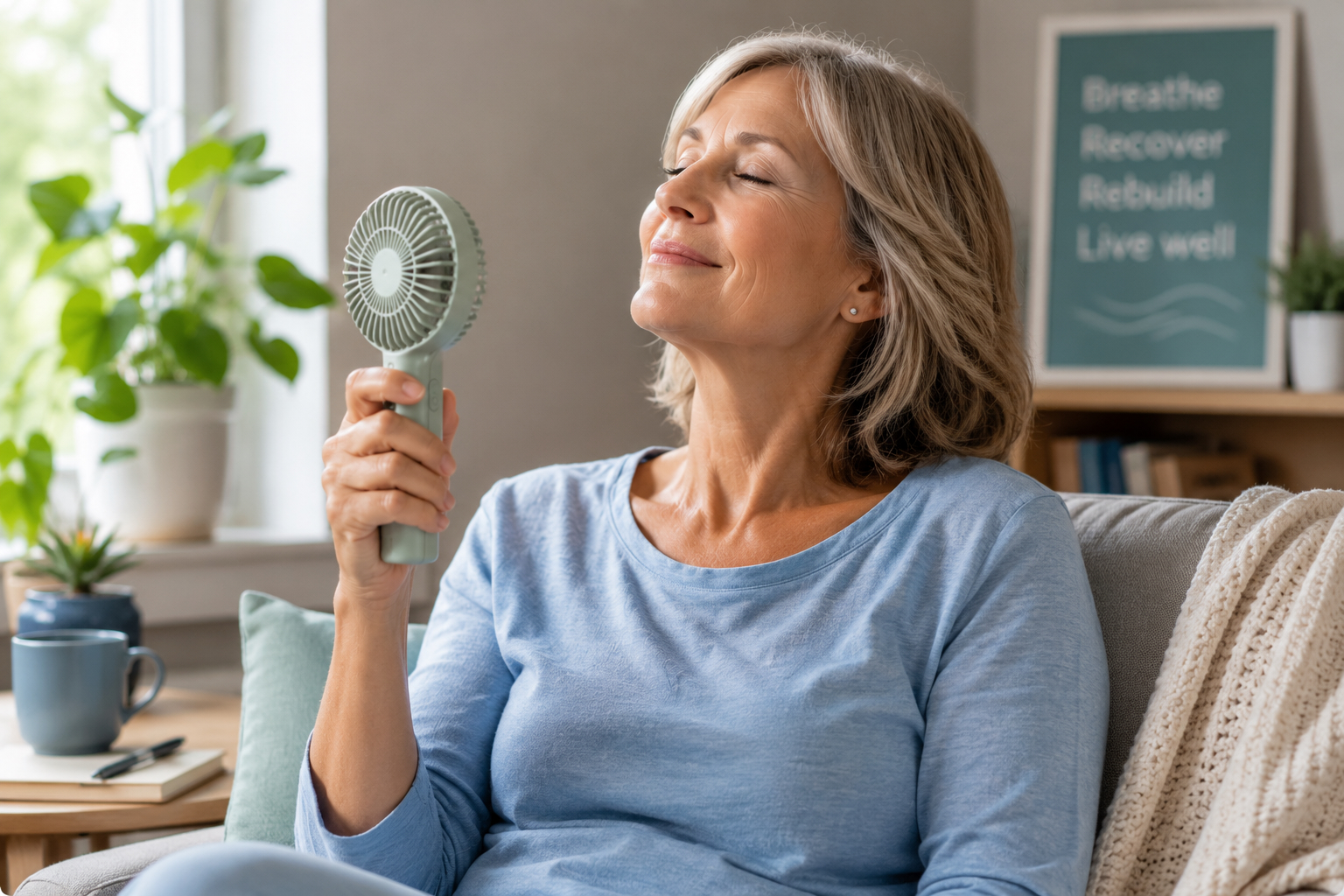
For most people, the fan works best when held around 15–20 centimetres from the face. Aim the airflow towards your nose, mouth and cheeks.
Use the fan while breathing slowly and comfortably. Many people combine the fan with recovery positions and breathing techniques — these approaches often work well together.
What does the evidence show?
Handheld fans have been studied in people living with chronic breathlessness caused by a range of long-term conditions. Research shows that many people experience meaningful relief from breathlessness while using a fan.
Because handheld fans are inexpensive, safe and easy to use, they are recommended in many breathlessness services as part of a broader self-management approach. Not everyone experiences the same level of benefit — but many people find that a fan becomes one of the most useful tools they carry.
Building your breathlessness toolkit
A handheld fan is not a cure for breathlessness. It does not replace medical treatment, pulmonary rehabilitation or breathing retraining. Instead, it becomes one tool within your personal breathlessness toolkit.
Many people use a combination of:
- recovery positions
- slow breathing
- pacing activities
- relaxation techniques
- regular physical activity
- a handheld fan.
Together, these strategies help reduce the impact of breathlessness on everyday life.
Sometimes the simplest ideas are the most effective
Healthcare often focuses on medicines, investigations and complex treatments. Yet some of the most effective ways of managing breathlessness are surprisingly simple.
A small handheld fan is one example. It is easy to use, easy to carry and easy to combine with other breathing strategies. For many people, it becomes a reliable source of reassurance during episodes of breathlessness. Sometimes, the smallest tools can make a meaningful difference.
Practical tips
- Hold the fan approximately 15–20 cm from your face.
- Aim the airflow towards your nose and mouth.
- Combine the fan with slow, relaxed breathing.
- Sit in a comfortable recovery position if needed.
- Keep the fan with you so it is available whenever breathlessness occurs.
Recovery
Feeling breathless?
Open the Recovery section for guided breathing, recovery positions and practical techniques that work well alongside a handheld fan.
Explore recovery techniques →Key messages
- A handheld fan helps many people feel less breathless by directing cool air towards the face.
- The fan changes how the brain interprets breathing rather than increasing oxygen levels.
- It is inexpensive, portable and safe to use alongside other breathlessness strategies.
- Many people find it most effective when combined with slow breathing, recovery positions and pacing.
- A handheld fan is one part of a broader self-management approach to living well with chronic breathlessness.