Breathlessness is one of the most unsettling symptoms a person can experience. Unlike pain, dizziness or fatigue, breathing is something we rely on every second of every day. Most of the time it happens automatically and without conscious effort.
When breathing suddenly feels difficult, uncomfortable or unsatisfying, it naturally attracts our attention. For many people, the experience can be frightening, even when there is no immediate danger. This reaction is completely normal.
Your brain is designed to protect you
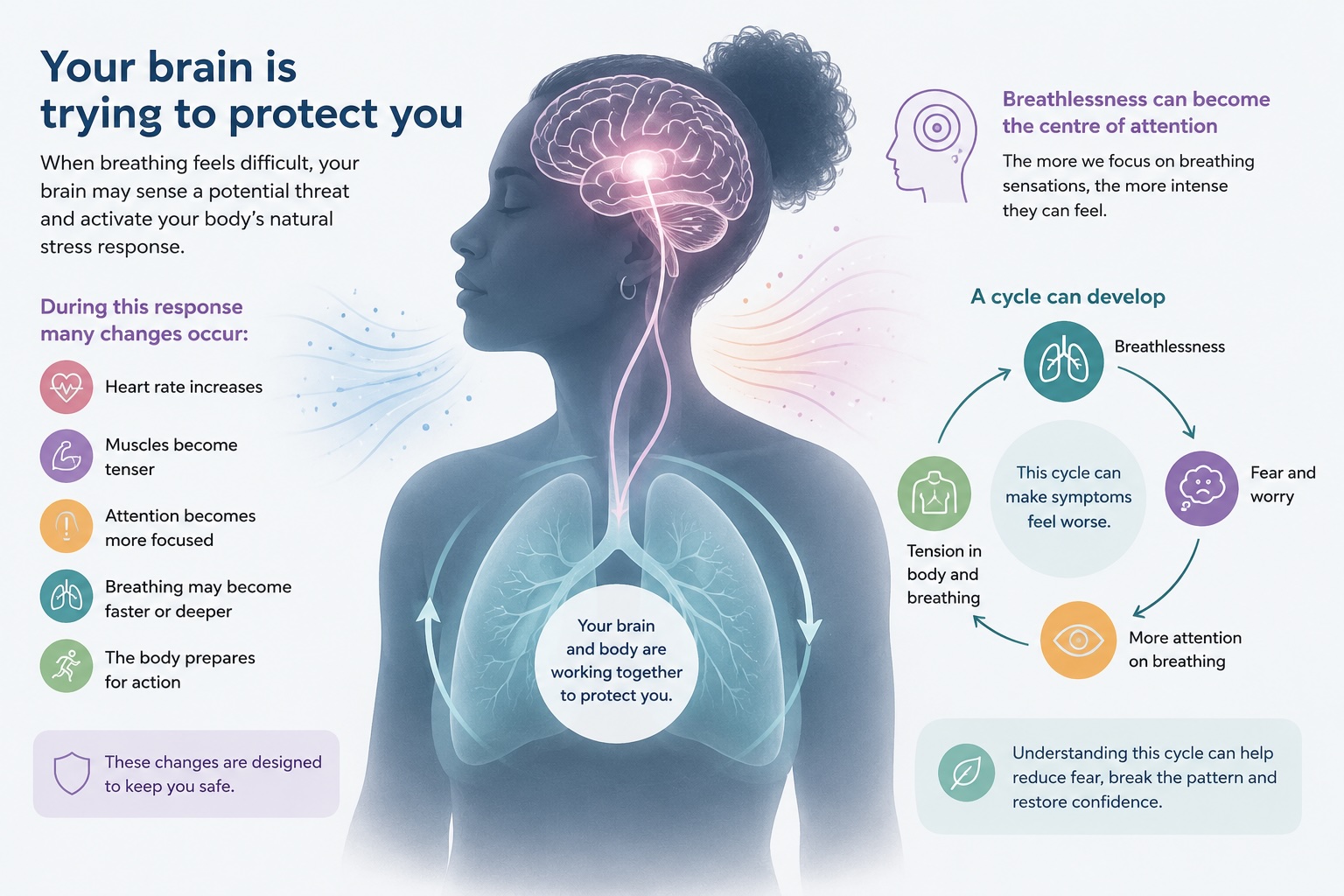
The brain constantly monitors the body for signs of potential threat. Breathing is one of the most important signals it watches. If breathing becomes uncomfortable, the brain may interpret this as a warning that something is wrong. As a result, it activates the body's natural stress response.
This response is sometimes called the "fight or flight" response. It is the same system that helps people react quickly to danger.
What happens during the stress response?
When the brain detects a potential threat:
- Heart rate increases
- Muscles become more tense
- Attention becomes more focused
- Breathing may become faster or deeper
- The body prepares for action
These changes are designed to help protect us. However, when they occur alongside breathlessness they can sometimes make symptoms feel even more noticeable. This is one of the ways that fear, tension and breathing can feed into one another — a pattern explored in the breathlessness cycle.
Breathlessness can become the centre of attention
Once breathing starts to feel uncomfortable, many people naturally begin monitoring it closely. They may notice:
- Every breath
- Small changes in chest sensations
- The urge to sigh or yawn
- Feelings of air hunger
- Tightness in the chest or throat
The more attention we give to breathing sensations, the more prominent they can appear. This does not mean symptoms are imagined. The symptoms are real. It simply reflects how the brain processes and prioritises information.
Fear can increase symptoms
When breathlessness feels frightening, it is common to think:
- “What if I can't get enough air?”
- “What if something serious is wrong?”
- “Why won't this feeling go away?”
- “What if it gets worse?”
These thoughts are understandable. Unfortunately, increased worry can lead to increased tension, faster breathing and greater awareness of symptoms. This can create a cycle in which fear makes breathlessness feel worse, which in turn increases fear. Many people become trapped in this cycle without realising it.
Breathlessness does not always mean low oxygen
One of the most common misconceptions is that feeling breathless means the body is not getting enough oxygen. In reality, the sensation of breathlessness is far more complex.
The brain receives information from the lungs, breathing muscles, heart, blood vessels and nervous system. It then combines these signals to create the experience of breathing. This means it is possible to feel very breathless even when oxygen levels are completely normal — something often confirmed when investigations come back reassuring.
Many people attending specialist breathlessness services have normal oxygen levels despite experiencing significant symptoms.
Reassurance can help
Understanding why breathlessness feels frightening can often reduce some of its power. When people recognise that symptoms are being amplified by the brain's protective systems, they often become less fearful of the sensations themselves.
This does not make the symptoms disappear instantly. However, it can help break the cycle of fear, tension and symptom monitoring that often keeps breathlessness going.
What can help?
Many people find the following strategies useful:
- Slowing the breath out rather than trying to take bigger breaths
- Relaxing the shoulders, neck and jaw
- Using cool air from a handheld fan
- Returning attention to the surrounding environment
- Gradually rebuilding confidence in movement and activity
- Learning more about how breathlessness works
The way we breathe day-to-day can also play a part. Small, sustainable changes to everyday breathing patterns can have a meaningful impact over time.
A different way of thinking about breathlessness
Breathlessness is not simply a problem of the lungs or heart. It is an experience created through the interaction of the body, the brain and the way we respond to symptoms.
Understanding this can be an important first step towards feeling more confident, less fearful and more in control.
Key messages
- Fear is a natural response — not a sign that something is wrong.
- Attention to breathing can make sensations feel more prominent.
- Breathlessness can occur even when oxygen levels are normal.
- Understanding the response can help reduce its intensity over time.