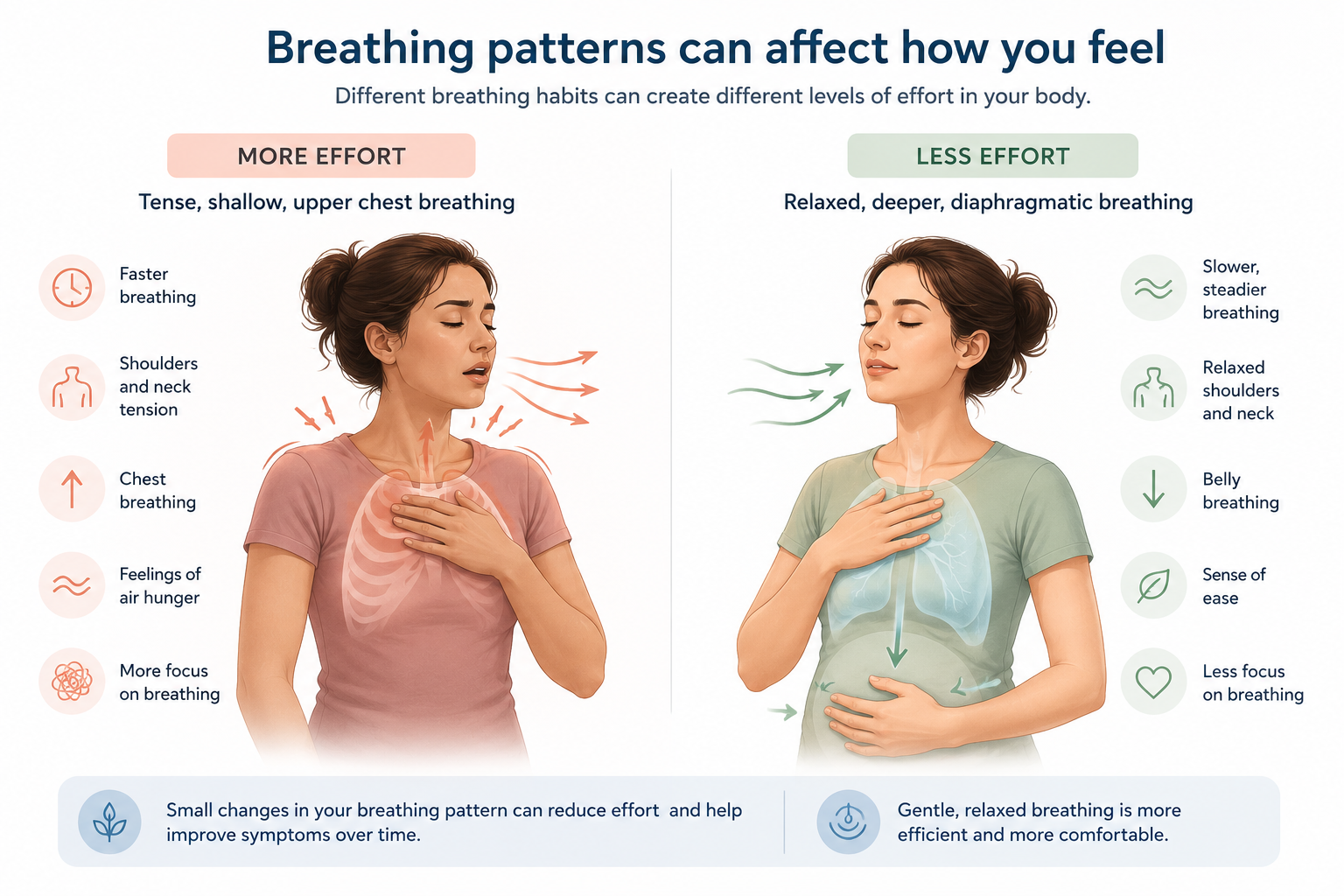
The way we breathe matters
Most people think breathing is simply about getting oxygen into the body and removing carbon dioxide. While that is true, the pattern of breathing is also important.
When breathing becomes less efficient, symptoms such as breathlessness, chest tightness, dizziness and air hunger can develop, even when lung function tests and oxygen levels are normal. This is one of the reasons symptoms can persist even when tests are reassuring.
Understanding breathing patterns can help explain symptoms that might otherwise feel confusing or frightening.
What is a breathing pattern?
A breathing pattern describes the way we breathe.
This includes:
- How fast we breathe
- How deeply we breathe
- Which muscles we use
- The rhythm of our breathing
- How breathing changes during activity, stress and rest
Healthy breathing patterns vary from person to person.
There is no such thing as a perfect breathing pattern.
However, some breathing habits can place extra strain on the breathing system and contribute to symptoms over time.
What is Breathing Pattern Disorder?
Breathing Pattern Disorder (BPD) is a term used when a person's breathing pattern becomes less efficient and contributes to symptoms.
This does not mean there is anything wrong with the lungs themselves.
Many people with breathing pattern problems have normal lung function tests, normal scans and normal oxygen levels.
The symptoms are real, but they arise from the way breathing is being controlled rather than from damage to the lungs.
Breathing pattern changes can occur on their own or alongside conditions such as asthma, COPD, heart disease, anxiety, post-viral illness and chronic breathlessness.
Common symptoms
People often describe:
- Feeling unable to get a satisfying breath
- Air hunger
- Frequent sighing or yawning
- Chest tightness
- Needing to take deep breaths
- Shortness of breath during everyday activities
- Light-headedness or dizziness
- Tingling in the fingers, lips or face
- A feeling of breathing too much or too hard
- Difficulty switching off thoughts about breathing
Not everyone experiences all of these symptoms.
Some people have only one or two.
Why can breathing patterns change?
Breathing patterns often change for understandable reasons.
Common triggers include:
- Respiratory infections
- Asthma flare-ups
- Stress and anxiety
- Pain
- Surgery
- Periods of inactivity
- Long-term illness
- Episodes of severe breathlessness
Many people can identify a point at which their symptoms first started.
For others, the changes happen gradually over time.
Once an altered breathing pattern develops, it can sometimes continue even after the original trigger has resolved.
Breathing can become a habit
Most breathing happens automatically.
The brain controls breathing without us having to think about it.
However, when breathing becomes uncomfortable, people often start paying much more attention to it.
They may begin taking larger breaths, checking their breathing repeatedly or trying to force their breathing to feel normal.
Although these reactions are understandable, they can sometimes make symptoms worse — particularly when fear becomes part of the response. Our guide on why breathlessness can feel frightening explores this in more depth.
Over time, breathing can become harder work than it needs to be.
Common breathing pattern changes
Some people breathe faster than their body requires.
Others breathe mainly from the upper chest rather than allowing the diaphragm to contribute naturally.
Some develop a pattern of frequent sighing, breath stacking or repeatedly taking deep breaths.
Others hold tension in the shoulders, neck and chest muscles.
These patterns can increase the sensation of breathlessness and create a feeling that breathing is never quite satisfying. They are also one of the ways breathing, thoughts and activity can reinforce one another within the breathlessness cycle.
Why symptoms feel so real
Many people worry that normal test results mean their symptoms are being dismissed.
This is not the case.
Breathing pattern symptoms are genuine physical symptoms.
The brain continuously receives information from breathing muscles, joints, nerves and the lungs. When breathing becomes inefficient, these signals can increase the sensation of breathing effort and discomfort.
This can create significant breathlessness despite normal oxygen levels and reassuring medical investigations.
Can breathing patterns improve?
Yes.
The breathing system is adaptable.
Many people notice improvement when they learn to recognise unhelpful breathing habits and gradually adopt more efficient patterns.
Recovery is usually not about taking bigger breaths.
Instead, it often involves:
- Slowing breathing down
- Breathing more gently
- Relaxing unnecessary muscle tension
- Extending the breath out
- Reducing over-monitoring of breathing
- Gradually rebuilding confidence in activity
Small changes practised consistently can make a meaningful difference over time.
The goal is not perfect breathing
Many people become anxious about trying to breathe correctly.
In reality, healthy breathing is flexible.
The goal is not to achieve a perfect breathing technique.
The goal is to develop a breathing pattern that feels comfortable, efficient and appropriate for the situation.
Understanding your breathing is the first step.
Key messages
- Breathing patterns vary — there is no perfect way to breathe.
- Inefficient patterns can produce real symptoms with normal tests.
- Patterns often change after illness, stress or periods of inactivity.
- Gentle, gradual change tends to be more effective than effortful change.