Introduction
Breathlessness is rarely caused by one thing alone. It is influenced by several interconnected factors, and the way we breathe, the thoughts and emotions we experience, and how active we are in daily life can all affect one another.
Sometimes these interactions create a self-reinforcing cycle, where changes in one area amplify changes in the others. This can make breathlessness feel more noticeable, more persistent and more difficult to manage — even when the underlying cause is well understood or stable.
Recognising this cycle is often the first step towards feeling more in control of symptoms. If you are still wondering what might be contributing to your symptoms in the first place, our overview of why breathlessness happens is a useful starting point.
What is the Breathlessness Cycle?
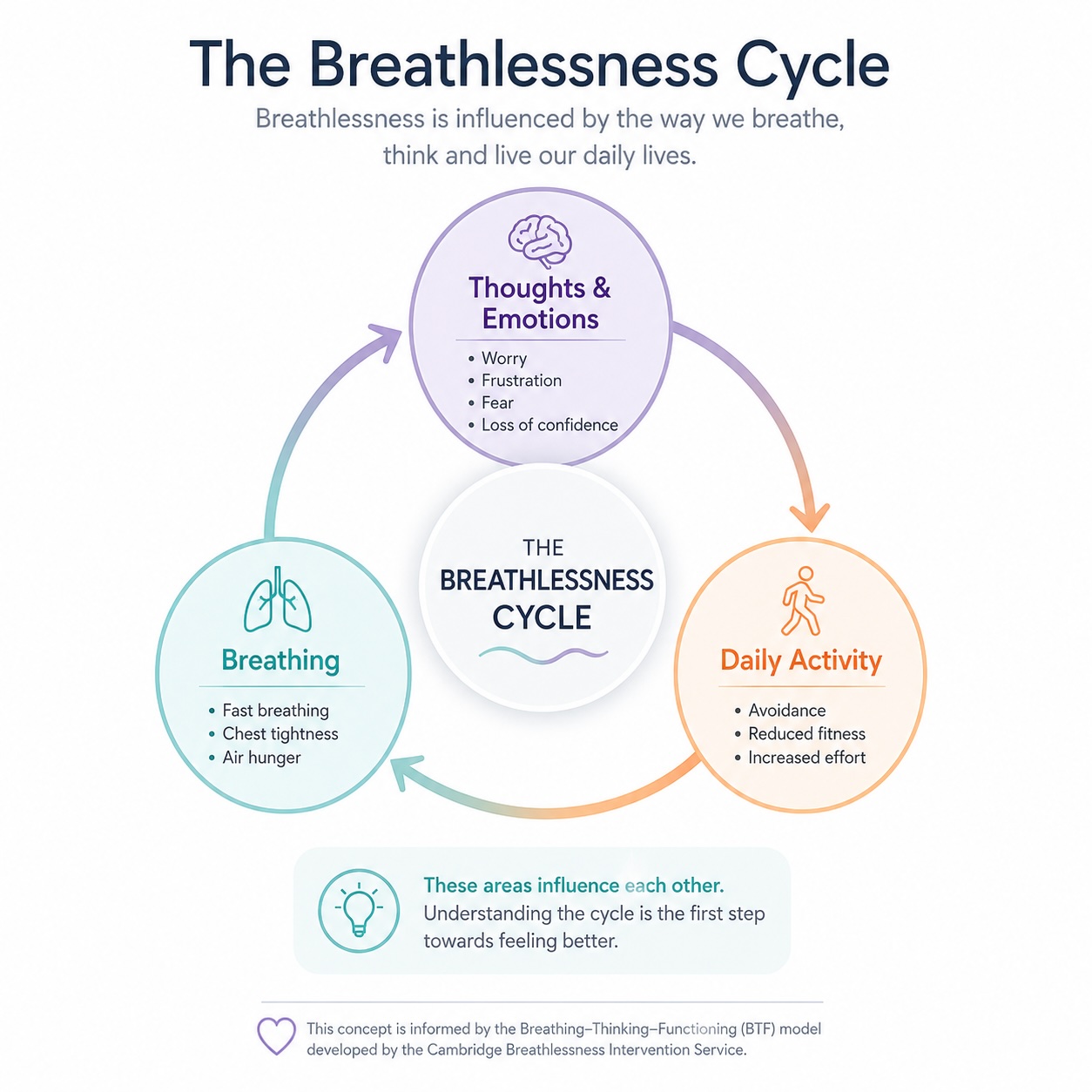
The Breathlessness Cycle describes the relationship between three connected areas:
- Breathing
- Thoughts and emotions
- Daily activity
Each area can influence the others. For example, worry about breathlessness can lead to faster, shallower breathing. Faster breathing can increase the sensation of breathlessness, which can lead to avoiding activities that feel difficult. Reduced activity can lower fitness over time, making everyday tasks feel harder — which in turn can increase worry.
None of these responses are unusual or wrong. They are understandable reactions to a symptom that can feel uncomfortable. But because each area feeds into the others, the cycle can quietly reinforce itself.
Breathing
When breathlessness occurs, breathing itself can change. People often notice:
- Feeling unable to get a satisfying breath
- Chest tightness
- Air hunger
- Frequent sighing or yawning
- A sensation of working harder to breathe
These responses are understandable. They are the body’s natural reaction to a sensation that feels important. Over time, however, they can also increase awareness of breathing and make symptoms feel more prominent. The way we breathe day-to-day can itself sustain symptoms, an idea explored in more depth in breathing patterns and breathlessness.
Thoughts and Emotions
Breathlessness can bring up a wide range of feelings, including:
- Worry
- Fear
- Frustration
- Loss of confidence
- Avoidance of situations that may trigger symptoms
These emotions are a natural response to a symptom that can feel alarming. Paying close attention to breathing sensations can sometimes make them feel stronger, and the more attention we give to the sensation, the more noticeable it can become. There are clear reasons why breathlessness feels frightening, and understanding them can take some of the power out of the fear.
Daily Activity
Breathlessness often changes how people move through their day. Common patterns include:
- Avoiding exercise
- Avoiding stairs or hills
- Needing more effort for daily activities
- Reduced confidence leaving home
- Reduced physical fitness
Reducing activity is a very natural response to feeling breathless. However, when activity is reduced over weeks or months, the body gradually becomes less conditioned. Muscles work less efficiently and the heart and lungs are asked to do less. This is known as deconditioning, and it can make even small tasks feel more breath-taking than they used to. The relationship between movement and symptoms is covered in more detail in activity, fitness and breathlessness.
Why understanding the cycle matters
Symptoms of breathlessness remain real even when scans, blood tests and lung function tests are reassuring. Breathlessness can be influenced by far more than underlying disease alone — including breathing patterns, thoughts, emotions, fitness and how the brain interprets breathing sensations.
Understanding the cycle helps explain why symptoms can persist or feel disproportionate, and why a broader approach — beyond medication alone — often makes a meaningful difference.
Breaking the cycle
Because each part of the cycle influences the others, small changes in one area can have a positive effect across the whole cycle. Approaches that can help include:
- Learning calmer breathing techniques
- Increasing confidence in movement
- Returning gradually to activity
- Understanding symptoms more clearly
- Reducing fear associated with breathlessness
You do not need to change everything at once. A small step in one area — a slightly slower breath, a short walk, or a clearer understanding of why a sensation is occurring — can begin to influence the others. Over time, these gentle shifts can help the cycle work in your favour rather than against you.
Key messages
- Breathing, thoughts and activity all influence one another.
- The cycle can quietly reinforce itself without any single cause.
- Symptoms are real, even when each individual factor seems small.
- Small changes in one area can ease the whole cycle over time.