Key message
Pulmonary rehabilitation is one of the most effective treatments for chronic breathlessness. It strengthens your body, builds confidence and helps you regain independence — one step at a time.
Why exercise helps, even when you're breathless
"If exercise makes me breathless, why would it help?" It is one of the most common questions people ask. If becoming active leaves you short of breath, exercising can seem like the last thing you should do.
The idea can feel confusing. Surely the answer is to avoid activities that make breathing difficult? In fact, research consistently shows the opposite.
Pulmonary rehabilitation is one of the most effective treatments available for people living with chronic breathlessness. It does not work because it makes breathlessness disappear overnight. It works because it helps your body and brain become better at responding to breathlessness.
What is pulmonary rehabilitation?
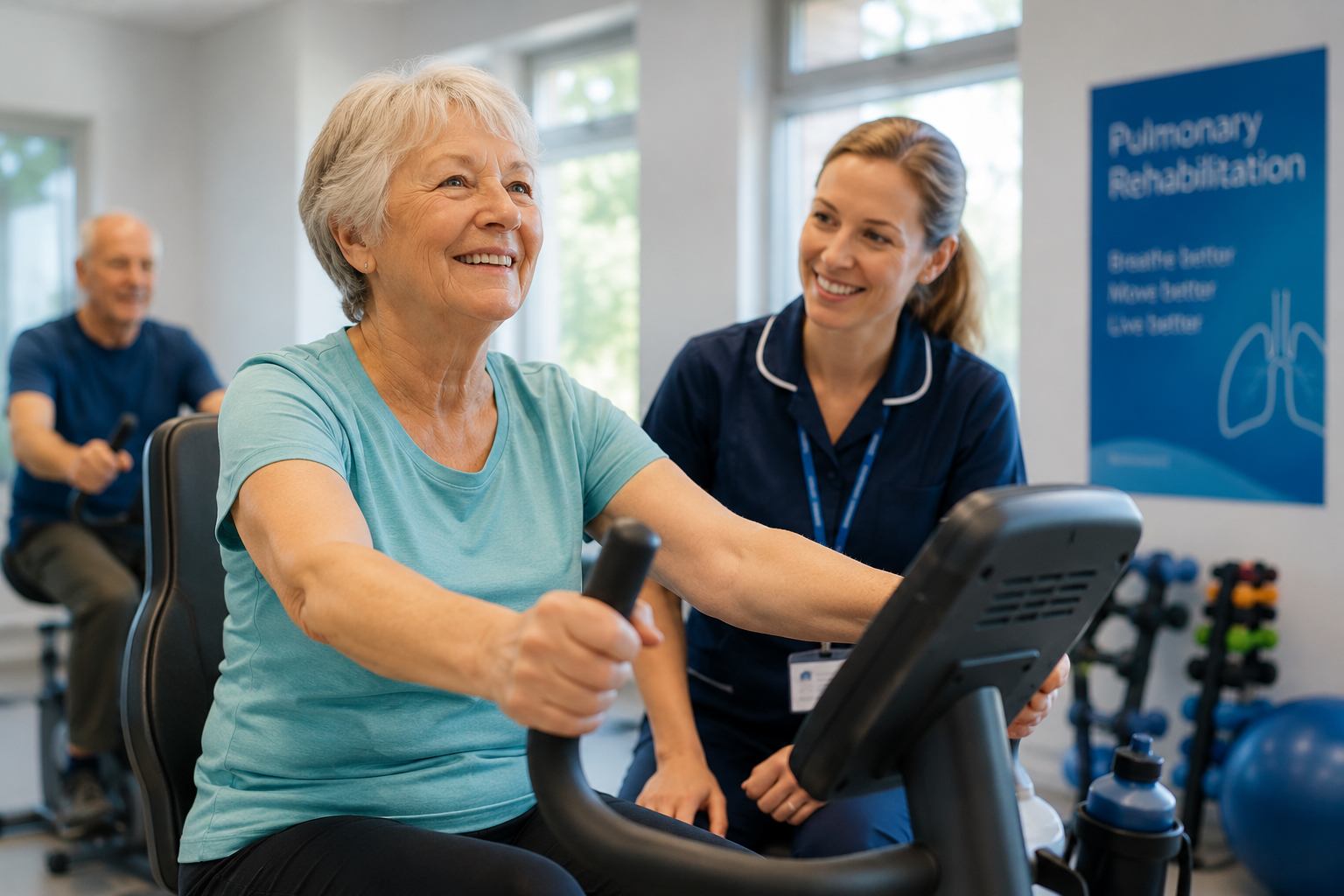
Pulmonary rehabilitation is a structured programme that combines:
- supervised exercise
- education
- breathing strategies
- practical self-management advice.
It is designed for people living with long-term respiratory conditions and persistent breathlessness. Programmes are delivered by experienced healthcare professionals and are tailored to each person's abilities and goals.
The aim is not to push people beyond their limits. The aim is to help people become more confident, more active and better able to manage everyday life.
Why it works
Breathlessness is influenced by much more than the lungs. Muscles, fitness, confidence, breathing patterns, previous experiences and fear all play a role in how breathlessness is experienced.
Pulmonary rehabilitation addresses many of these factors at the same time. That is one reason it is so effective.
Stronger muscles make everyday life easier
When we become less active, our muscles gradually become less efficient. Everyday tasks begin to require more effort — walking to the shops, climbing the stairs, carrying shopping. These activities demand more energy than they once did.
As muscles become stronger and more efficient through regular exercise, they need less oxygen to perform the same task. They also produce less carbon dioxide and fatigue more slowly. This means everyday activities often feel easier, even if your lung condition has not changed.
Your brain learns that movement is safe
Many people begin to avoid activity after frightening experiences of breathlessness. This is completely understandable. Over time, however, the brain may begin to associate movement with danger.
Pulmonary rehabilitation provides repeated opportunities to move in a safe, supported environment. Each successful session becomes another positive experience. Gradually, the brain begins to expect that activity can be completed safely. Confidence grows. Fear reduces.
This is one reason pulmonary rehabilitation often changes how breathlessness feels, as well as how far people can walk.
Building confidence through success
One of the greatest benefits of pulmonary rehabilitation is not measured on a treadmill. It is measured in confidence. People often discover they are capable of much more than they expected:
- Walking a little further.
- Recovering more quickly.
- Using breathing techniques successfully.
- Completing activities they had previously avoided.
These repeated achievements build self-efficacy — the confidence that breathlessness can be managed. That confidence often extends well beyond the rehabilitation programme itself.
Breathlessness becomes less frightening
Pulmonary rehabilitation does not teach people to ignore breathlessness. Instead, it helps them understand it.
People learn that becoming slightly breathless during exercise is expected. They learn how to recover, how to pace themselves, and how to use breathing techniques effectively.
As understanding increases, fear often begins to reduce. Breathlessness may still occur, but it becomes less alarming and less likely to interrupt everyday life.
Keeping the benefits after rehabilitation
Pulmonary rehabilitation is not simply an exercise class. It is the beginning of a long-term change in how you manage your breathing.
The greatest improvements often occur when people continue using what they have learned after the programme has finished:
- Regular activity.
- Breathing exercises.
- Pacing.
- Recovery strategies.
These habits help maintain the benefits over time.
Every step matters
Pulmonary rehabilitation is supported by some of the strongest evidence in respiratory medicine. It improves exercise capacity, confidence and quality of life for many people living with chronic breathlessness.
You do not need to become an athlete. You simply need to take the next step. Every walk, every exercise session, every successful recovery — each one teaches your body and your brain that breathlessness can be managed. That is why pulmonary rehabilitation works.
Practical tips
- Attend every rehabilitation session if possible.
- Focus on steady progress rather than perfection.
- Use the breathing techniques you learn during exercise.
- Continue being active after the programme finishes.
- Remember that confidence grows with every successful session.
Key messages
- Pulmonary rehabilitation is one of the most effective non-pharmacological treatments for chronic breathlessness.
- It combines exercise, education and self-management to improve confidence and everyday function.
- Stronger, more efficient muscles require less effort during everyday activities.
- Repeated positive experiences help the brain become less fearful of movement.
- The programme builds self-efficacy, making breathlessness feel more manageable over time.
- The greatest long-term benefits come from continuing the skills and habits developed during rehabilitation.