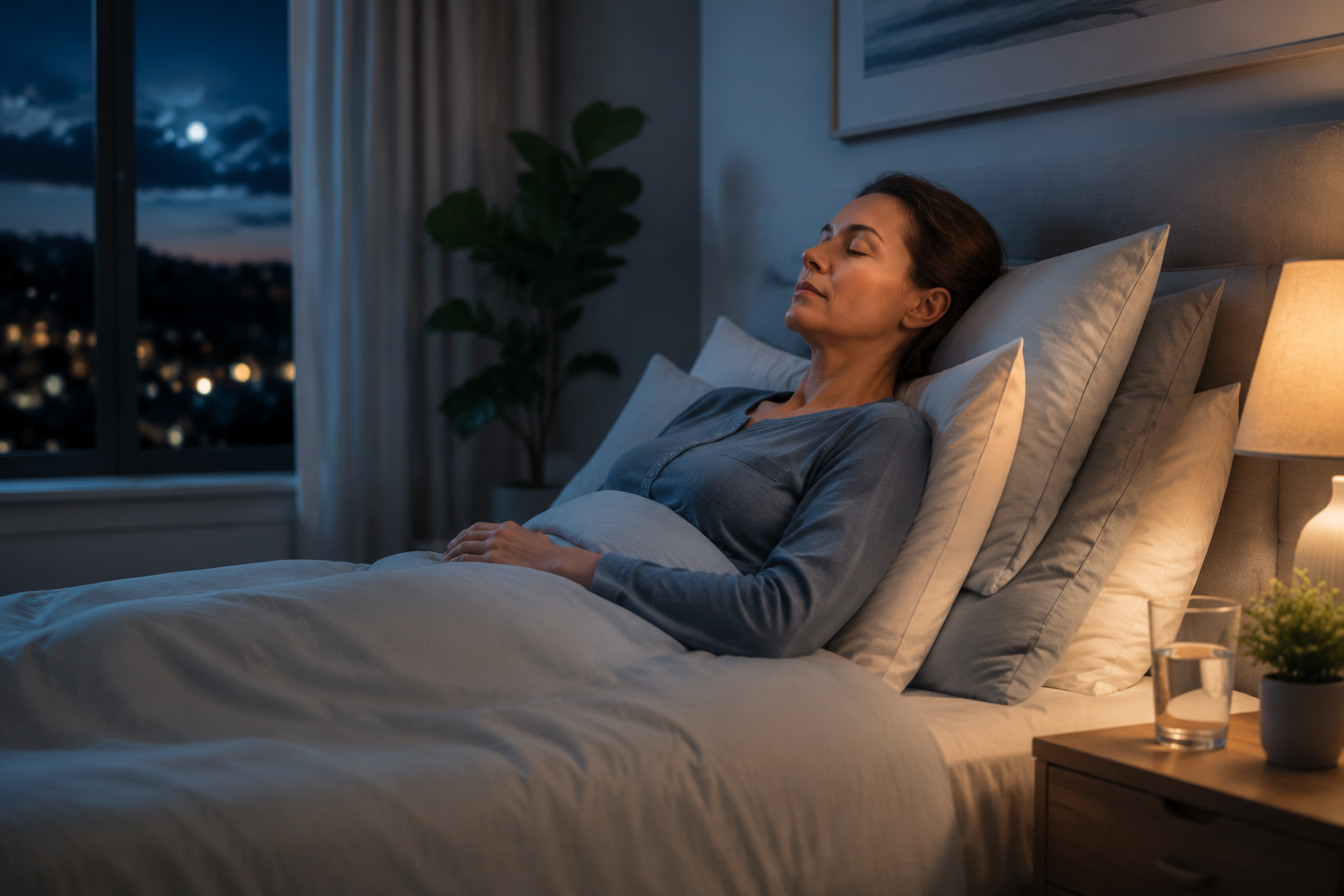
Night-time creates the perfect conditions for breathlessness
Night doesn't usually cause breathlessness by itself. Instead, several small changes happen at the same time. None of these changes is usually enough to cause symptoms on its own, but together they can make breathing feel very different.
These changes include:
- You lie flat, which changes how your lungs and breathing muscles work.
- Your body's internal clock makes small overnight changes to your breathing.
- Your bedroom becomes quiet, so you're naturally more aware of your breathing.
- If you have an underlying heart or lung condition, these normal changes may become much more noticeable.
For many people, it's this combination of factors that explains why breathing feels different at night.
Lying flat changes how your lungs work
The biggest change happens the moment you lie down.
When you're standing or sitting, gravity helps keep your abdominal organs lower in your tummy. As soon as you lie flat, gravity allows these organs to move upwards and press gently against your diaphragm — the large muscle beneath your lungs that does most of the work of breathing.
This means:
- your lungs have slightly less room to expand
- each breath requires a little more effort
- the small airways may become slightly narrower
- your brain may not feel as though you've taken a satisfying breath.
These changes happen in everyone, even people with healthy lungs. Most people never notice them, but if your breathing is already sensitive or you're living with a lung or heart condition, the difference can become much more noticeable.
Why does sitting up or using extra pillows help?
Many people instinctively sit upright or sleep with extra pillows when they feel short of breath.
This works because it reverses many of the changes caused by lying flat.
When you sit up:
- gravity pulls your abdominal organs back down, giving your lungs more room to expand
- your diaphragm can move more freely
- your lungs hold a little more air between breaths
- your breathing muscles work more efficiently.
For people with some heart conditions, sitting upright also helps reduce the amount of blood and fluid returning towards the chest, making breathing easier.
Using pillows doesn't treat the underlying cause, but it often makes breathing more comfortable while you sleep by keeping your upper body slightly elevated.
This is why many people naturally sit on the edge of the bed or prop themselves up with pillows during an episode of breathlessness. Your body is instinctively finding a position that makes breathing as easy as possible.
Why you notice your breathing more at night
Breathlessness isn't just about the lungs. It's also about how the brain interprets signals from the body.
During the day, your brain is busy processing conversations, work, television, music, movement and countless other distractions. These all compete for your attention.
At night, those distractions disappear.
In a quiet, dark bedroom, your brain has far fewer distractions competing for its attention. As a result, you naturally become more aware of what's happening inside your body, including your breathing. Small changes that might go unnoticed during the day can suddenly feel much more obvious.
If you've been worried about your breathing, this increased awareness can make every breath feel more important, even when your oxygen levels and breathing tests are normal.
This doesn't mean your symptoms aren't real. It simply reflects the close relationship between the lungs and the brain.
Your body's internal clock also plays a role
Like many parts of the body, your lungs follow a natural daily rhythm.
Overnight, natural changes in hormones and the nervous system can make the breathing tubes slightly narrower and more sensitive. Most healthy people never notice these changes, but in conditions such as asthma they can make symptoms more noticeable during the night or in the early hours of the morning.
These natural changes are only one piece of the puzzle, but they add to the effects of lying flat and the quieter night-time environment.
When underlying medical conditions make it worse
Some medical conditions make the normal changes that happen at night much more noticeable.
Asthma
Many people with asthma notice that symptoms are worse overnight. The airways naturally become slightly narrower at night, and inflammation may increase, making coughing, wheezing and chest tightness more likely.
COPD
People with COPD may notice that lying flat or changes in mucus production overnight make breathing feel more difficult. Some people also find that clearing sputum is harder first thing in the morning.
Heart failure
If the heart is struggling to pump efficiently, lying flat allows more blood and fluid to move towards the lungs. This can make breathing much more difficult and is one reason why some people find they need to sleep sitting upright.
Obesity
Carrying extra weight around the abdomen can make it harder for the diaphragm to move when lying flat. This reduces the amount of air the lungs can hold and increases the work of breathing.
Acid reflux (reflux or GORD)
Lying flat makes it easier for stomach acid to travel upwards into the food pipe. This can irritate the throat and airways, causing coughing, chest tightness or worsening breathlessness, particularly after large evening meals.
Sleep-disordered breathing
Conditions such as obstructive sleep apnoea can cause repeated interruptions to breathing during sleep. Some people wake suddenly feeling short of breath or unrefreshed, often alongside loud snoring or witnessed pauses in breathing.
What can I do if my breathing feels worse at night?
Depending on the cause, you may find it helpful to:
- avoid lying completely flat if this makes your breathing uncomfortable
- use pillows or an adjustable bed to find a more comfortable position
- sleep on your side if this feels easier
- avoid large meals or alcohol close to bedtime if reflux is a problem
- take your prescribed inhalers and other medications as advised, even if your symptoms mainly occur at night
- check your inhaler technique if you have asthma or COPD, as using it correctly can make a significant difference
- use a handheld fan if you've found this helpful for managing breathlessness
- practise calm breathing and relaxation techniques if anxiety is making symptoms feel worse.
Not every suggestion will help everyone, so it's worth finding what works best for you.
When should I seek medical advice?
While many people notice small changes in their breathing at night, some symptoms should always be discussed with a healthcare professional. Arrange medical assessment if you:
- find you can no longer lie flat because it makes you feel short of breath (this is called orthopnoea)
- wake suddenly during the night gasping for breath (paroxysmal nocturnal dyspnoea)
- notice increasing ankle swelling alongside worsening breathlessness
- develop a new persistent cough or wheeze
- find your symptoms are becoming progressively worse.
Seek urgent medical attention if breathlessness is severe, comes on suddenly, is associated with chest pain, fainting, coughing up blood, or you are struggling to speak because of your breathing.
Key messages
- Feeling more breathless at night is common and often has several contributing causes.
- Lying flat changes how your lungs and breathing muscles work, making breathing feel more effortful.
- A quiet bedroom makes you naturally more aware of your breathing.
- Several small changes happen overnight, including changes caused by your body's internal clock.
- Sleeping with extra pillows often helps because they give your lungs more room to expand and reduce the work of breathing.
- If you cannot lie flat comfortably or wake gasping for air, you should discuss this with a healthcare professional.
Many people worry that becoming more breathless at night means their condition is suddenly getting worse. In reality, night-time simply brings together several normal changes in posture, body position, awareness and physiology. For people living with breathlessness, these changes can make symptoms much more noticeable. Understanding why this happens won't make the sensation disappear, but it can make it much less frightening. At the same time, recognising symptoms such as orthopnoea or waking gasping for breath helps ensure that conditions needing treatment are identified promptly.