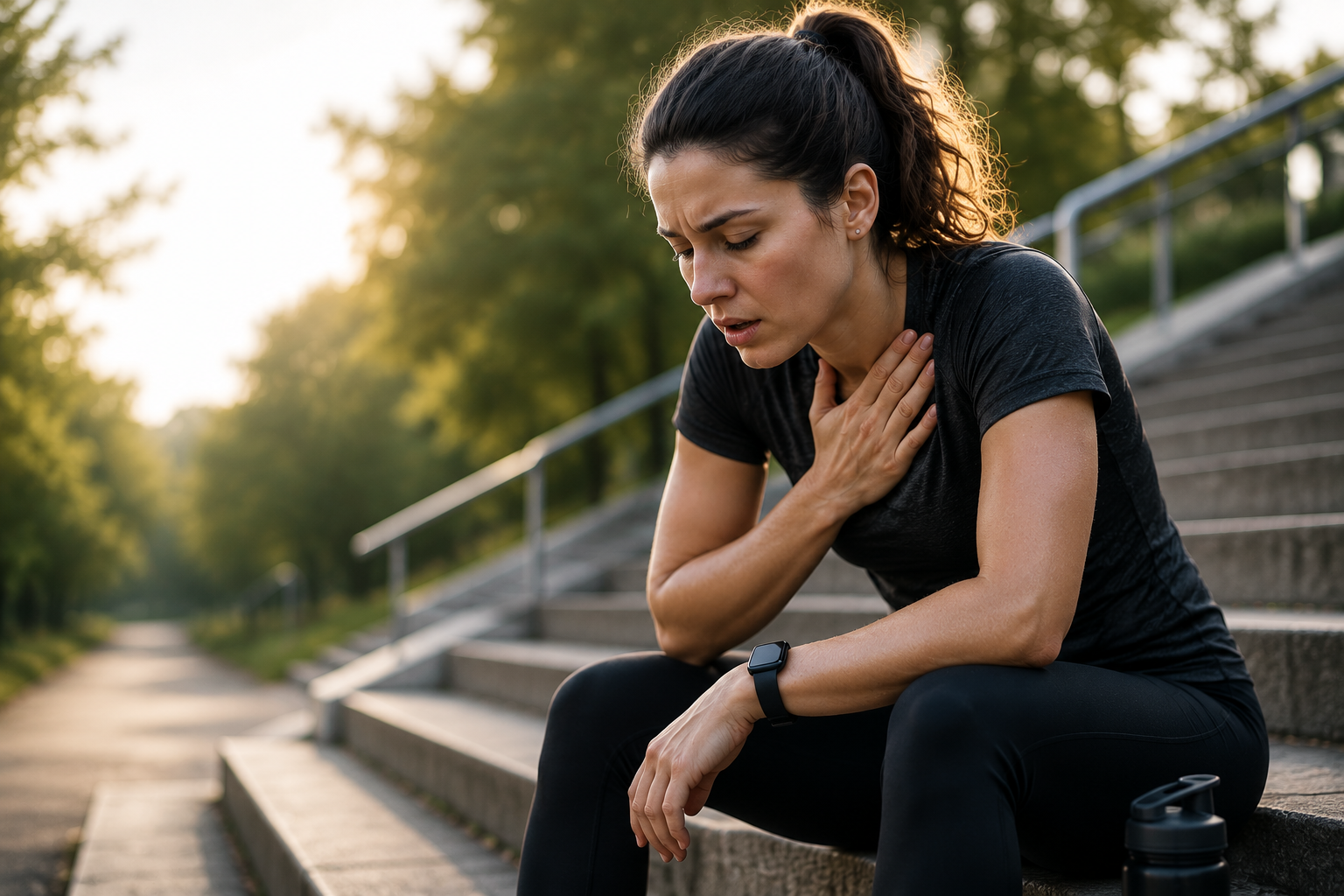
For many people, recovering from COVID-19 means gradually returning to normal life. For others, the infection ends but the breathlessness does not. Weeks or even months later, climbing the stairs, carrying shopping or walking the dog may still leave them unexpectedly short of breath.
This can be confusing. Many people expect breathlessness to mean that their lungs have been permanently damaged. Others are reassured that their chest X-ray, CT scan, lung function tests or oxygen levels are normal, yet still feel unable to carry out everyday activities without becoming breathless.
The important message is that persistent breathlessness after COVID-19 is recognised by clinicians and researchers as a genuine symptom. It does not necessarily indicate permanent lung damage, and normal test results do not mean that the symptom is imagined or "all in your head".
Persistent breathlessness after COVID-19 can arise from several different changes within the body. These changes vary from person to person, which is one reason why recovery can look very different for different individuals.
Why can COVID leave people breathless?
Breathing depends on much more than healthy lungs.
Every breath requires the lungs, heart, circulation, muscles and nervous system to work together. The brain constantly monitors information from all of these systems before deciding how much breathing is required. If any part of this system is not working as efficiently as usual, breathing can feel harder.
COVID-19 has the potential to affect several of these systems simultaneously.
Some people experience inflammation within the lungs during the acute infection. Others develop muscle weakness after prolonged illness or reduced activity. Some notice changes in heart rate regulation or become less physically fit while recovering. Altered breathing patterns can also develop after weeks of coughing, chest discomfort or simply living with persistent breathlessness.
Different people experience different combinations of these changes. This is one reason why one person may recover quickly while another needs much longer. It also explains why treatments that help one person may not be right for someone else. There is unlikely to be one explanation that applies to everyone with Long COVID. Rather than representing a single disease with one cause, Long COVID is best thought of as an umbrella term describing different patterns of recovery.
This explains why there is no single test that confirms Long COVID and no single treatment that works for everyone.
Does persistent breathlessness mean my lungs are permanently damaged?
Usually, no.
This is one of the commonest concerns expressed by people with persistent symptoms.
Severe COVID-19 pneumonia can leave scarring or other structural abnormalities within the lungs. This is most likely in people who required intensive care, mechanical ventilation or developed acute respiratory distress syndrome (ARDS). These patients often require ongoing follow-up with respiratory specialists.
However, many people who continue to experience breathlessness after COVID-19 have reassuring chest imaging and little evidence of permanent lung injury.
This is encouraging because it means that persistent breathlessness does not automatically indicate irreversible damage.
Instead, many people appear to experience changes in how their body responds during activity rather than obvious structural abnormalities visible on routine scans.
Think of your body like a car.
A mechanic may examine the engine while it is idling and find nothing obviously wrong. The same car may only develop problems when driven up a steep hill under heavy load. Similarly, many medical investigations assess the body at rest, while breathlessness is usually experienced during movement or exercise.
Why can my scans, breathing tests and oxygen levels all be normal?
This is perhaps the most confusing aspect of Long COVID.
Many people tell their clinician:
"Everything came back normal, but I still can't breathe properly."
Fortunately, there is a logical explanation.
Routine investigations are designed to identify important structural diseases such as pneumonia, pulmonary fibrosis, asthma, COPD or heart failure. They are extremely valuable because they help exclude conditions that require specific treatment.
However, no single investigation measures every aspect of breathing.
For example:
- Chest X-rays and CT scans show the structure of the lungs but cannot fully explain how breathing feels during everyday activity.
- Spirometry measures airflow through the airways but does not assess every cause of exertional breathlessness.
- Oxygen saturation measures how much oxygen is attached to haemoglobin in the blood, but it does not measure breathing effort, muscle function, heart-rate responses or the brain's perception of breathing.
This is why it is entirely possible to have:
- a normal chest X-ray,
- normal oxygen levels,
- reassuring lung function,
and still experience genuine breathlessness.
Normal results should therefore be viewed positively. Although it can feel frustrating not to have a simple explanation, normal results help rule out many serious conditions that require specific treatment. They reduce the likelihood of serious structural lung disease, while recognising that they do not explain every cause of persistent symptoms.
Why can I feel so breathless if my oxygen level is normal?
Many people assume that breathlessness and low oxygen are the same thing.
They are not.
Oxygen saturation tells us how much oxygen is being carried in the bloodstream. Breathlessness is a sensation generated by the brain after interpreting information from multiple sources.
These include:
- breathing effort,
- carbon dioxide levels,
- signals from the chest wall and breathing muscles,
- heart rate,
- physical activity,
- previous experiences,
- emotional state.
Because these systems work together, someone can experience intense "air hunger" despite completely normal oxygen saturation.
You have already seen this principle elsewhere on this website.
The brain continuously compares the breathing it expects with the feedback it receives. If those signals do not match, breathing can feel uncomfortable or unsatisfying even though oxygen delivery remains normal.
This does not mean the symptom is psychological.
It means that the sensation of breathing is far more complex than oxygen levels alone.
Why does activity affect people differently?
One of the most challenging aspects of recovery is deciding how active to be.
For many people, gradually rebuilding activity is an important part of recovery. After any illness, reduced activity can lead to loss of fitness, weaker muscles and reduced confidence. Carefully increasing activity can help reverse these changes.
However, recovery after COVID-19 is not identical for everyone.
Some people notice that activity makes them feel better over time.
Others experience a delayed worsening of symptoms several hours or even a day after physical, mental or emotional exertion. This is often described as post-exertional symptom exacerbation (PESE) or post-exertional malaise (PEM).
People experiencing PESE may notice:
- marked fatigue after activity,
- worsening breathlessness,
- increased brain fog,
- muscle aches,
- flu-like symptoms,
- recovery taking days rather than hours.
If this pattern occurs, simply trying to "push through" symptoms may not be helpful.
Instead, clinicians often recommend pacing.
Pacing involves balancing activity and rest to reduce symptom flare-ups while maintaining as much daily function as possible. The aim is not to avoid activity altogether, but to work within your current limits while recovery continues.
If you are unsure which pattern describes you, discuss this with your healthcare professional before starting an intensive exercise programme.
What investigations might I need?
Not everyone requires extensive testing.
The investigations your clinician recommends will depend on your symptoms, medical history and how your recovery is progressing. Their purpose is not simply to diagnose Long COVID.
Instead, investigations are used to answer three important questions:
- Is there another condition causing your breathlessness? For example, asthma, heart disease, pulmonary embolism, anaemia or interstitial lung disease.
- Has COVID-19 left any ongoing effects on your lungs, heart or circulation that need specific treatment or follow-up?
- Which body systems appear to be contributing most to your symptoms? This helps guide the most appropriate management and rehabilitation.
Depending on your symptoms, your clinician may recommend tests such as chest imaging, lung function testing, blood tests, exercise assessment or heart investigations.
Long COVID should therefore be considered alongside other possible causes of breathlessness, not instead of them.
What can help?
There is currently no single treatment for post-COVID breathlessness because different people experience different physiological changes.
Management therefore focuses on identifying the factors contributing to your symptoms.
Depending on your situation, this may include:
Pulmonary rehabilitation
Structured rehabilitation programmes can improve exercise capacity, confidence and quality of life in selected patients. These programmes do much more than simply improve fitness. They also help people understand breathlessness, build confidence and return to everyday activities safely.
Gradual return to activity
Many people benefit from progressively rebuilding strength and endurance using an individualised programme.
Breathing retraining
Some people develop altered breathing patterns following COVID-19, often after weeks of coughing or living with breathlessness. Breathing retraining with an experienced clinician can help restore more efficient, relaxed breathing.
Managing other contributing conditions
Identifying and treating other conditions — such as asthma, heart rate abnormalities or anaemia — can meaningfully reduce breathlessness.
Psychological support
Living with persistent breathlessness is understandably frightening. Fear, anxiety and reduced confidence often develop alongside physical symptoms. Recognising this is not the same as saying symptoms are imagined — it acknowledges that physical and emotional responses influence one another.
This does not mean that breathlessness is imagined.
It simply recognises that physical and emotional responses influence one another.
Recovery often involves rebuilding confidence as well as physical function. Many people begin avoiding activities because they are understandably worried about becoming breathless. Gradually returning to meaningful activities, at a pace that matches your current abilities and symptoms, can become an important part of recovery.
Will it get better?
This is one of the hardest questions to answer.
The reassuring news is that many people gradually improve over time.
However, recovery is rarely a straight line.
It is common to experience:
- good days,
- bad days,
- temporary setbacks,
- periods where progress seems to stall.
These fluctuations do not necessarily mean that recovery has stopped.
Some people recover within weeks or months, while others continue to improve more gradually over a longer period. Unfortunately, it is not yet possible to predict an individual's recovery based on one scan, one breathing test or one clinic appointment.
Try not to judge your progress from one difficult day.
Instead, look for changes over weeks or months.
Small improvements in walking distance, confidence, daily activities or recovery after exertion are often more meaningful than day-to-day symptom changes.
When should I seek medical advice?
Persistent breathlessness after COVID is common, but new or worsening symptoms should never automatically be attributed to Long COVID.
Seek urgent medical assessment if you develop:
- sudden or rapidly worsening breathlessness;
- severe breathlessness at rest;
- new chest pain, particularly if it feels heavy, tight or crushing;
- coughing up blood;
- fainting or near-fainting;
- new swelling or pain in one leg;
- blue or grey lips or skin;
- confusion or severe drowsiness.
If you have been advised to monitor your oxygen saturation at home, seek medical advice if it falls below the range recommended by your healthcare team or if you are concerned about a significant deterioration.
Key messages
- Persistent breathlessness after COVID-19 is common and recognised by healthcare professionals.
- It does not necessarily mean that your lungs have been permanently damaged.
- Normal chest scans, lung function tests and oxygen levels do not mean that your symptoms are imagined.
- COVID-19 can affect several systems involved in breathing, including the lungs, heart, circulation, muscles and nervous system, so different people experience different patterns of recovery.
- Recovery is often gradual and may fluctuate over time. Treatment should be tailored to your individual pattern of symptoms, and any new or rapidly worsening breathlessness should always be assessed by a healthcare professional.
Living with breathlessness after COVID-19 can be frustrating and frightening, particularly when tests appear normal. Although recovery can take time, many people gradually improve. Understanding why breathlessness happens, recognising your own pattern of symptoms and working with your healthcare team to find the right rehabilitation approach are important steps towards regaining confidence and returning to the activities that matter most.